
2026 Top Chaga Powder Types for Global Buyers
The 2026 market for Chaga Powder is becoming more selective, not simply larger. Global buyers now compare wild-harvested powder, cultivated powder, hot-water extracts, dual extracts, and spray-dried concentrates. Each type behaves differently in a warehouse, during testing, and inside a finished product.
Paul Stamets, a respected mycologist and mushroom researcher, has said, “Mushrooms are miniature pharmaceutical factories.” His observation encourages buyers to examine more than appearance. Dark color does not prove quality. A reliable supplier should explain the Chaga’s origin, harvesting method, processing temperature, moisture level, particle size, and extraction ratio. Independent testing should address heavy metals, pesticides, microbial contamination, and identity. Certificates alone are not enough.
The details matter.
For example, a fine powder may disperse quickly in tea but absorb moisture inside a poorly sealed bag. A concentrated extract may offer stronger analytical values, yet its carrier and extraction method require careful review. Organic certification can support sourcing claims, but it does not automatically confirm freshness or potency. Buyers should also check labeling rules in each destination market, because permitted claims and documentation can differ widely.
This guide compares leading Chaga Powder types for international procurement in 2026. It considers practical use, specification transparency, supply consistency, and testing evidence. Some categories overlap, and no single type suits every buyer. That is the uncomfortable part. A lower price may reflect efficient processing, or it may hide weaker documentation. Careful questions remain essential.
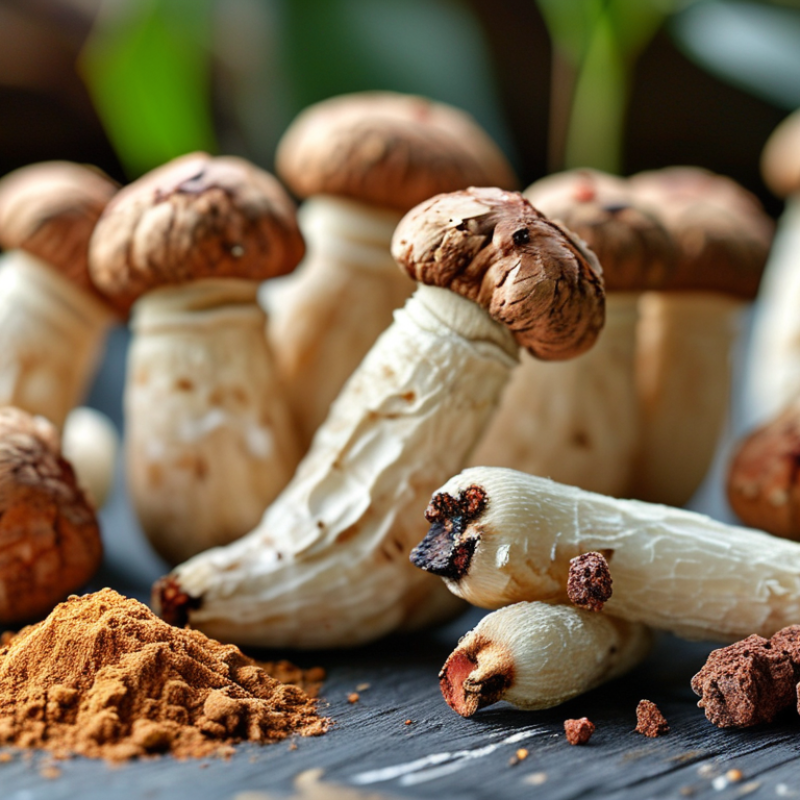
Table of Contents [Hide]
What Is Chaga Powder and Why Is It Important for Global Buyers
What Is Chaga Powder and Why Is It Important for Global Buyers
Chaga powder is made from the dried and milled fruiting body or sterile conk of Inonotus obliquus. It usually appears dark brown, with an earthy smell and slightly bitter taste. Buyers should check the raw material carefully. Bark, wood, ash, or excessive fillers can reduce value. A fine powder is convenient, but appearance alone proves little.
Chaga contains polysaccharides, polyphenols, and other naturally occurring compounds. However, human evidence remains limited, and it should not be marketed as a treatment. The European Food Safety Authority repeatedly stresses that health claims require adequate scientific support. That point matters when suppliers prepare international labels, technical sheets, and product descriptions. “Natural” does not mean risk-free.
Market data explains the growing attention. The Food and Agriculture Organization’s FAOSTAT database reports more than 40 million tonnes of cultivated mushrooms and truffles globally in recent years. Chaga is not included in that volume, because it is mainly wild-harvested or specially cultivated. Grand View Research’s 2024 functional mushroom analysis also identifies strong expansion in mushroom-based wellness products. Yet forecasts are not proof of quality. Global buyers need batch testing, species identification, moisture results, heavy-metal screening, and traceable harvesting records. I would also request extraction details. Powder and extract are not interchangeable. That distinction is often missed.
2026 Top Chaga Powder Types for Global Buyers - What Is Chaga Powder and Why Is It Important for Global Buyers
A practical comparison of non-branded chaga powder categories, processing methods, specifications, and international purchasing considerations
| Chaga Powder Type | Raw Material Basis | Typical Processing | Typical Particle Form | Main Buyer Use | Key Advantages | Important Limitations |
|---|---|---|---|---|---|---|
| Whole Chaga Fruiting-Body Powder | Dried sclerotium, commonly called the chaga conk, from Inonotus obliquus | Cleaning, drying, milling, and sieving; no extraction | Brown to dark-brown fine powder; often approximately 60–100 mesh, subject to supplier specification | Tea blends, capsules, food formulations, and traditional-use products | Simple ingredient profile, broad formulation flexibility, and lower processing complexity | Poorer water dispersibility and lower immediate availability of some cell-wall-bound compounds than extracts |
| Hot-Water Chaga Extract Powder | Chaga fruiting body or approved fungal biomass extracted with water | Aqueous extraction, concentration, and spray- or freeze-drying | Instant or free-flowing brown powder; commonly supplied as an extract ratio such as 4:1 or 8:1 | Instant beverages, sachets, functional powders, and capsules | Better water solubility and convenient use in beverage applications | Extract ratios are not standardized potency measurements; a certificate of analysis is required for comparison |
| Dual-Extract Chaga Powder | Chaga material processed through both water and food-grade alcohol extraction | Sequential or combined hot-water and ethanol extraction, followed by solvent removal and drying | Fine brown powder; extract ratio and solvent details should be stated separately | Premium capsules, liquid-to-powder formulations, and specialized functional-food products | Designed to cover water-soluble and some alcohol-soluble constituents in one ingredient | Higher production cost, more complex documentation, and greater need for residual-solvent testing |
| Chaga Mycelium Powder | Cultivated fungal mycelium grown on a defined substrate | Controlled cultivation, biomass harvesting, drying, and milling; extraction may be added | Light to medium-brown powder; substrate content depends on cultivation and purification method | Year-round supplement manufacturing and standardized ingredient programs | More predictable supply and traceable cultivation conditions than wild-collected material | Not chemically identical to wild fruiting-body material; buyers should verify species, biomass identity, and substrate disclosure |
| Organic-Production Chaga Powder | Chaga produced under an applicable organic certification system | Processing follows the relevant organic rules for harvesting, handling, processing, and recordkeeping | Powder or extract powder; physical characteristics depend on the underlying material | Organic-labeled food, beverage, and supplement products where accepted by the destination market | Supports certified-organic product positioning and supply-chain documentation | “Organic” is a certification claim, not a guarantee of higher beta-glucan, antioxidant, or triterpene content |
| Instant Beverage-Grade Chaga Powder | Usually an aqueous chaga extract formulated for rapid dispersion | Extraction, concentration, drying, and optional agglomeration or carrier addition | Free-flowing, water-dispersible powder; instant performance should be confirmed by testing | Ready-to-mix drinks, tea products, stick packs, and powdered beverage blends | Convenient dosing, faster preparation, and improved suitability for industrial beverage lines | May contain carriers, sweeteners, or flow aids; buyers must review the full ingredient and allergen declaration |
Global Buyer Data Checklist
| Data Dimension | What Should Be Confirmed | Why It Matters for International Purchasing |
|---|---|---|
| Botanical and Material Identity | Scientific name, material type, country or region of origin, and fruiting body versus mycelium status | Prevents substitution and supports correct labeling, customs documentation, and formulation decisions |
| Extraction Information | Extraction solvent, extraction ratio, native or concentrated format, and carrier content | Allows meaningful comparison between powders that may use different processing methods |
| Quality and Safety Testing | Microbiology, heavy metals, pesticides, mycotoxins where applicable, residual solvents, and foreign matter | Requirements vary by destination market and product category; testing supports regulatory and retailer acceptance |
| Standardization Markers | Declared testing method and measured levels for beta-glucans, polysaccharides, or other requested markers | “Polysaccharides” and “beta-glucans” are not interchangeable unless the analytical method is clearly defined |
| Physical Specifications | Mesh size, moisture, bulk density, color, odor, solubility or dispersibility, and packaging format | Determines compatibility with capsules, sachets, beverage equipment, and storage conditions |
| Shelf Life and Logistics | Manufacturing date, retest or expiry date, recommended storage, minimum order quantity, and lead time | Helps buyers manage inventory, humidity exposure, transport conditions, and landed cost |
Note: Chaga powder specifications vary by raw material, cultivation or harvesting method, extraction process, analytical method, and destination-market regulations. Values and claims should be verified against a current certificate of analysis and applicable import requirements.